-
Insurers expect the security at a high-value home to match what is inside it. That usually means approved locks on external doors and accessible windows, an intruder alarm that is maintained and used, and, where jewellery, watches or other valuables are kept at home, a safe of a suitable standard. These home insurance security requirements are written into the policy, and if they are not met, a theft claim may be reduced or declined.
The more valuable a home and its contents, the more detail an insurer will want about how they are protected. This guide explains why high-value homes face different burglary risks, the security measures specialist insurers commonly ask about, and how to read the security conditions in your high value home insurance so they do not catch you out at claim stage.
Key Takeaways
- Home insurance security requirements are usually conditions of cover, not suggestions.
- Insurers of high-value homes commonly ask about door and window locks, intruder alarms, safes and how valuables are stored.
- Police response to an alarm in England, Wales and Northern Ireland depends on the system being installed and monitored by approved companies.
- Security measures can affect your home insurance premium and terms, but the outcome depends on each insurer's assessment.
- After a burglary, report it to the police, get a crime reference number and tell your insurer or broker straight away.
General Information
This article is for information only and does not constitute advice on any particular policy. Security requirements vary between insurers and between policies, and the terms that apply to you are those set out in your own policy schedule and wording. Before relying on anything here, check your wording or speak to a qualified broker who can look at your circumstances.
Why High-Value Homes Face Different Burglary Risks
Police crime prevention advice focuses on removing easy opportunities: an open window, a door left unlocked, keys visible from the hallway.
High-value homes face those same risks, plus another. Where a home is known or assumed to contain jewellery, watches, art or prestige vehicles, it may be targeted deliberately rather than by chance. That changes what an insurer wants to know, so insurers look closely at how every point of entry is secured and how valuables are stored once someone is inside.
Common factors that can increase the risk include:
- Valuable items visible from the street or garden
- Social media posts that show possessions, travel plans or the inside of the home
- Keys to the house or to prestige vehicles kept near the front door
- Predictable absences, such as a second home or regular holidays
- Building works, deliveries or staff that bring more people to the property
None of this means a high-value home is unsafe. It means that the security measures need to be proportionate to what is being protected.
Home Insurance Security Requirements: What Insurers Commonly Ask For
Each insurer offering high net worth home insurance sets its own requirements, and they usually depend on the value of the buildings and contents, the location, and the claims history. The following are the areas a specialist insurer is most likely to ask about.
Locks on External Doors and Windows
Door locks are the starting point. Police security guidance published through ProtectUK recommends locks tested to British Standards, such as a BS 3621 five-lever mortice deadlock on solid timber external doors. For the front door of a flat or a house converted into flats, it recommends a BS 8621 lock, which can be opened from the inside without a key to allow a quick exit in a fire.
Insurers commonly ask whether external doors and accessible windows have locks of a stated standard. Patio doors, French doors and garage doors that connect to the house can be covered by these requirements too. If you are unsure what your locks are, a locksmith can confirm it.
Intruder Alarms
For higher-value homes, an intruder alarm may be a requirement rather than an option. Alarms generally fall into three types:
- Audible only. The alarm sounds at the property but nobody is notified automatically.
- Monitored with keyholder response. An alarm receiving centre alerts named keyholders when the alarm activates.
- Monitored with police response. The alarm receiving centre can request police attendance.
Police response comes with conditions. The National Security Inspectorate (NSI) explains that police in the UK, excluding Scotland, commit to an immediate response, subject to priorities, for compliant systems, but that this is withdrawn after three false alarm calls in a rolling twelve-month period. Crimestoppers notes that police will attend a monitored alarm only where it meets the National Police Chiefs' Council requirements, which include using a company approved by the NSI or the Security Systems and Alarms Inspection Board (SSAIB).
If your insurer requires a particular type of alarm, it may also require it to be maintained under contract and set whenever the home is empty. Check whether yours does.
Safes
Where jewellery, watches or cash are kept at home above a certain value, an insurer providing home insurance for high-value properties may require a safe. The grade of safe needed, and whether it must be bolted down, depends on the insurer and on what is kept inside. A safe that does not meet the insurer's specification may not count, so check the requirement before you buy.
Some clients choose to keep their most valuable items in a bank vault or secure storage when they are not being worn. Tell your insurer where items are kept, because it can affect how they are covered.
CCTV and External Lighting
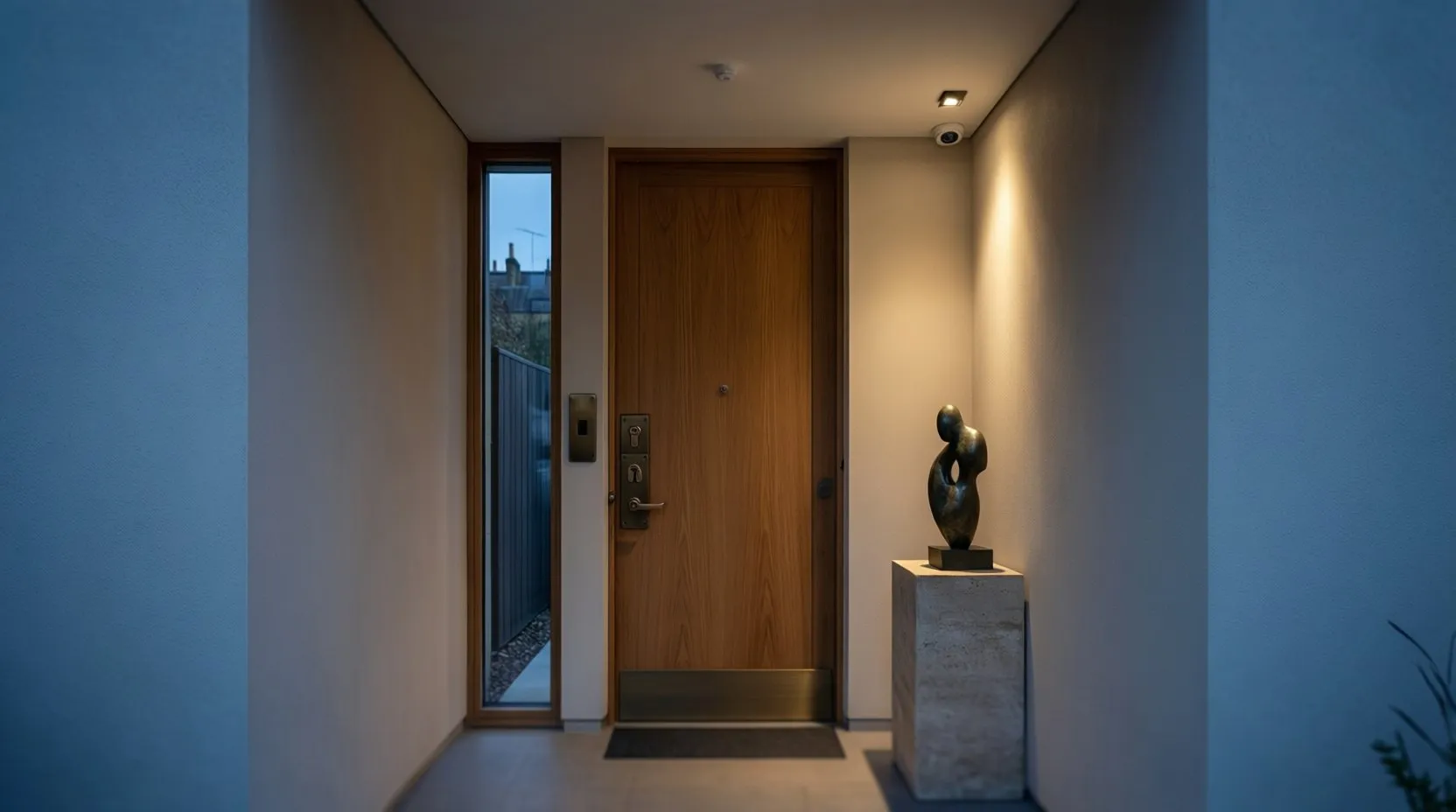
CCTV and security lighting can help deter burglars and provide evidence after a break-in. Insurers may ask whether they are installed.
If your cameras capture anything beyond your property boundary, data protection law applies. The Information Commissioner's Office advises positioning cameras to capture only your own property where possible, and explains the rules you must follow if they record a neighbour's property or a public area.
Garages, Sheds and Gardens
Outbuildings can be less secure than the house. Tools and ladders kept in a shed or garage can be used to break into the main property. Lock outbuildings, keep tools and ladders secured, and do not keep spare keys in a shed or garage. Check how your policy covers items kept in outbuildings, because limits can be lower than for the main house.
Read the Small Print: Security Conditions and Your Claim
Security requirements usually appear in your policy schedule or as endorsements, and they are worth reading closely. A typical condition might require that:
- Specified locks are fitted and used whenever the home is left unattended or at night
- The intruder alarm is maintained under contract and set when the home is empty
- Valuables above a stated value are kept in a safe when not being worn
- You tell the insurer if the alarm develops a fault or a maintenance contract lapses
How these conditions are worded matters. Where a security requirement is a condition precedent to cover, failing to meet it can affect a theft claim. Read the wording, and if any requirement does not match how you actually live, raise it with your broker before a loss rather than after.
Tell your insurer or broker about any change that affects security: building works, a new alarm provider, a period away from home, or a significant new purchase.
How Security Affects Your Home Insurance Premium
Insurers take security into account when deciding whether to offer specialist home insurance, on what terms and at what premium. Good security can help, but it is one factor among several, alongside the value of the home and contents, the location and the claims history. Some insurers may reflect improved security in their terms. Others may simply require it as a minimum.
The more useful point is that a home with security that matches its value is easier to insure on suitable terms, and a claim is less likely to be complicated by a breach of a security condition.
Home Security Tips for High-Value Homes
Alongside the requirements in your policy, these practical steps help deter thieves and reduce the impact of a burglary.
- Keep keys out of sight. Police advice is to keep all keys, including car keys, out of sight and away from the letterbox. Do not label keys or leave spare keys outside.
- Keep valuables out of sight. Avoid displaying jewellery, watches or portable valuables where they can be seen from windows.
- Be careful online. Avoid posting travel plans in real time or images that show valuable items or the layout of your home.
- Keep records. Photograph valuable items, keep receipts and valuations, and record serial numbers. This helps the police and your insurer if items are stolen.
- Update valuations. Have jewellery, watches and art valued regularly so your sums insured stay accurate.
- Plan for absences. Set the alarm, use timer switches, and arrange for someone trusted to check the property when you are away.
- Check who has access. Keep track of who holds keys and alarm codes, including staff and contractors, and change codes when people leave.
The way jewellery is treated under high value home insurance differs from standard cover in how items are listed, valued and stored, so good records matter. For collections of art, wine or other valuables, high value asset insurance is arranged around the specific items.
What to Do After a Burglary
If you discover a burglary, your priority is your own safety. Do not go in if you think someone is still inside, and call 999 if a crime is in progress.
Once it is safe:
- Report it to the police and get a crime reference number. Your insurer is likely to ask for it.
- Tell your insurer or broker as soon as you can.
- Record the damage with photographs before you tidy up, unless you need to make the property secure.
- List what is missing, with any receipts, photographs and valuations you hold.
- Make the property secure, such as by arranging an emergency glazier or locksmith, and keep the invoices.
Our private clients have access to specialist claims support, so you have experienced support when you make a claim.
Arranging High-Value Home Insurance With Ellis David
We have been arranging cover for private clients from our office on Essex Road in Islington, London, for over 50 years, and our team has 150+ years' combined experience.
We work with 100+ UK insurers and specialist underwriters, which gives us a wide range of specialist insurers to approach for high-value homes and their contents. We take time to understand your home, your possessions and how you live before recommending cover, and we can go through the security conditions with you so you know what each policy expects. Our advisers are UK-based and reachable by phone or email, and we are authorised and regulated by the Financial Conduct Authority.
Clients with several homes, vehicles and collections can bring them together under high net worth insurance, and prestige or classic cars can be covered with specialist car insurance. For larger homes with land and outbuildings, private and country estate insurance is arranged around the whole estate.
You can meet the team who would look after your policies. If you would like your current security requirements reviewed, speak to our private clients team about insurance for your high-value home.
Frequently Asked Questions
What Security Do Insurers Require for a High-Value Home?
It varies by insurer and by the value of the home and its contents. Insurers commonly ask about locks on external doors and accessible windows, an intruder alarm, and a safe for valuables kept at home. The specific requirements that apply to you will be in your policy schedule or endorsements.
Do I Need a Burglar Alarm for Home Insurance?
Not always, but for higher-value homes an insurer may require one. Some insurers specify a monitored alarm installed and maintained by an approved company. If your policy requires an alarm, it is likely to also require that the alarm is set when the home is empty.
Will Better Home Security Reduce My Insurance Premium?
It can, but there is no guarantee. Insurers consider security alongside the value of the property and contents, the location and the claims history. Some may reflect improved security in their terms, while others treat it as a minimum requirement.
What Happens If I Forget to Set My Alarm and I Am Burgled?
It depends on how your policy is worded. If setting the alarm is a condition of cover, failing to do so may affect a theft claim. Check your wording, and speak to your broker if a condition does not reflect how you use your home.
Do I Need a Crime Reference Number to Claim for a Burglary?
Your insurer is likely to ask for one. Report the burglary to the police as soon as it is safe to do so, and keep the reference number with your claim details.
Can I Use CCTV at My Home?
Yes. If your cameras record only your own property, data protection law does not apply. If they capture a neighbour's property, a shared space or a public area, data protection law applies and you must follow the Information Commissioner's Office guidance.
Useful Resources
- ProtectUK (police), Security at home: https://protectuk.police.uk/security-home
- National Security Inspectorate, Choosing your intruder alarm system provider: https://www.nsi.org.uk/?p=22732
- Crimestoppers, Security systems: what you need to know: https://crimestoppers-uk.org/news-media/news/2023/oct/security-systems-what-you-need-to-know
- Information Commissioner's Office, Domestic CCTV systems guidance: https://ico.org.uk/your-data-matters/domestic-cctv-systems-guidance-for-people-using-cctv/
Private Client
Burglary and Targeted Theft Risk in High-Value Homes: What Insurers Expect You to Have in Place