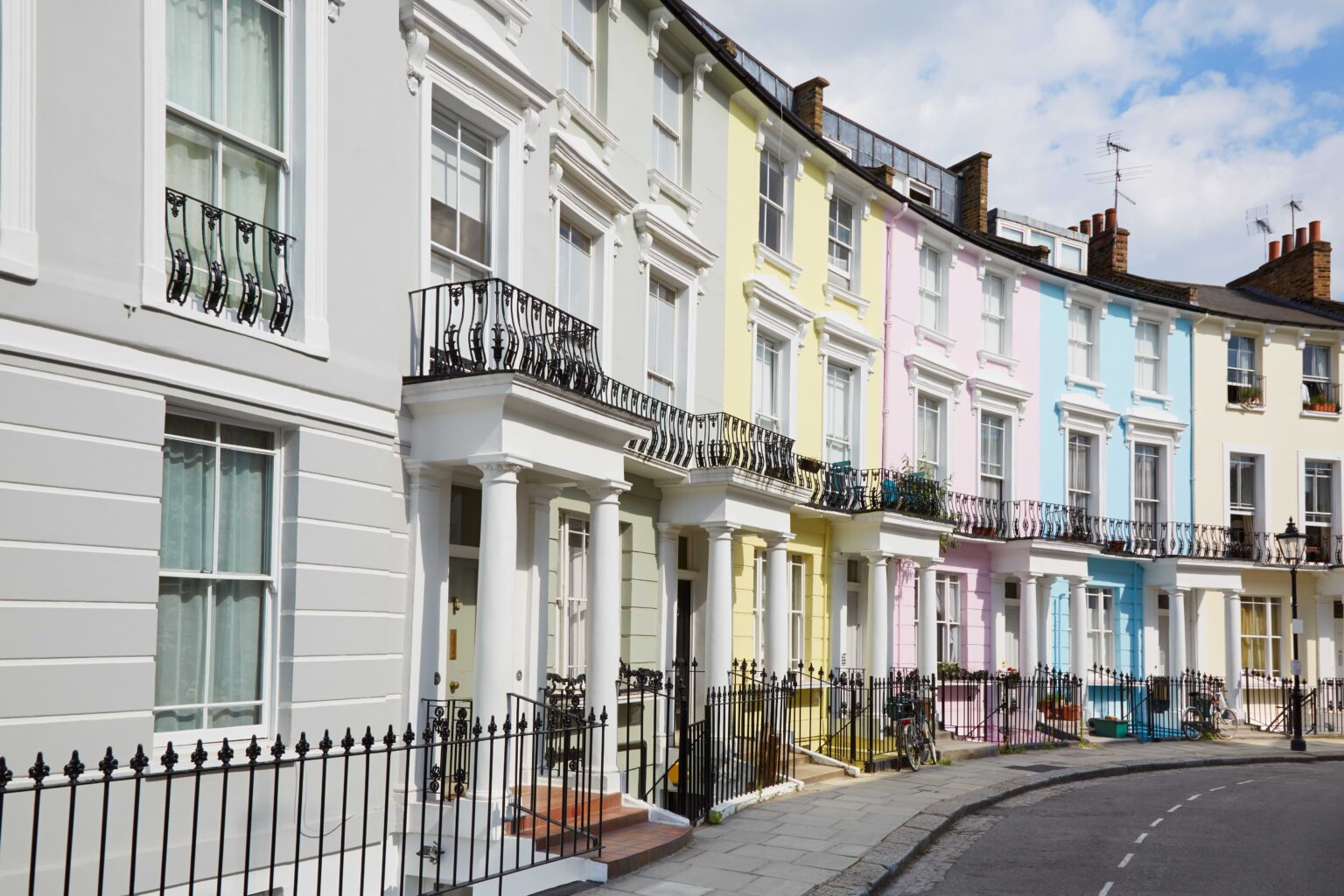
Flood and Subsidence Risk in Prime London Property
A Victorian terrace in Notting Hill develops a diagonal crack above a ground floor window one dry summer. A basement conversion in Chelsea takes in water during a heavy storm, not from a river, but from surface water with nowhere else to go. Neither event involves a burst pipe or a fire. According to data from the Association of British Insurers (ABI), subsidence claims totalled £153 million in 2025, with claims being made by almost 9,000 households.
Flood and subsidence are different perils with different causes, but prime central London property is exposed to both at once, often because of the same underlying features: older construction, basements and lower ground floors, and clay-heavy soil across large parts of the capital. Understanding how each risk actually works is the starting point for making sure a policy responds when it needs to.
General Information Disclaimer
This article is for information only and does not constitute advice on any particular policy. Insurance cover varies significantly between insurers and between individual policies, and the terms that apply to your property are those set out in your own policy wording. Before relying on anything here, check your wording or speak to a qualified broker who can assess your circumstances. Ellis David Limited is authorised and regulated by the Financial Conduct Authority. For advice on high value buildings insurance, speak to our team.
Why Prime London Property Carries Both Risks at Once
Prime London property tends to share a set of characteristics that push both flood and subsidence risk higher than they would be for an equivalent modern property elsewhere. Period buildings in areas such as Kensington, Chelsea, Islington and Hampstead were largely built before modern drainage standards existed. Many have been extended downwards with basement or lower ground floor conversions, which sit below street level and in the direct path of surface water. The same boroughs sit on London clay, a soil type that is particularly sensitive to changes in moisture content.
None of this means a claim is inevitable. It does mean that a policy needs to be built around the actual construction and location of the property, rather than assumed from a standard postcode-based rating model.
Flood Risk: What High Value Buildings Insurance Needs to Address
Flooding in central London rarely means a river bursting its banks. The more common exposure is surface water flooding, where heavy rainfall overwhelms drains faster than they can clear it, and water collects in the lowest points of a street or a property. Basements and lower ground floors, common in prime London conversions, are the parts of a building most exposed to this kind of event.
A buildings policy needs to reflect this properly rather than treating a basement conversion as an afterthought. Points worth checking include:
- Whether basement and lower ground floor areas are specifically described and covered, rather than assumed to fall under general buildings cover
- Whether flood resilience measures (such as flood barriers, non-return valves or raised electrics) are recognised by the insurer, and whether they affect the excess or the premium
- What excess applies specifically to flood claims, as this is often set separately from the standard excess
- Whether alternative accommodation cover is sufficient for the likely repair period, since a flooded basement conversion in a listed or period building can take considerably longer to dry out and reinstate than a modern property
Where a flood claim leads to significant reinstatement work, particularly in a listed or period property, the works themselves may need separate consideration. Our guide to cover for contract works and renovations covers how that gap is typically addressed.
Subsidence Risk: The Slow-Moving Threat Beneath Prime Properties
Subsidence is a different kind of problem. Rather than a single event, it is usually the result of ground movement beneath a building's foundations, most commonly linked to clay soil shrinking during dry periods and swelling again when moisture returns. London clay is particularly prone to this shrink-swell cycle, and mature trees close to a property can make it worse, since their roots draw moisture from the surrounding soil.
Period properties are more exposed than modern ones for several reasons. Foundations on Victorian and Georgian buildings are typically shallower than current building regulations require. Many prime London streets are lined with large, mature trees that predate the buildings themselves. And where a basement has been added to an older property, the excavation can itself disturb the surrounding soil structure.
Warning signs of subsidence are not always dramatic. Diagonal cracking, particularly around doors and windows, doors and windows that begin to stick, and cracks that appear to widen and narrow with the seasons are all worth having assessed by a structural professional rather than dismissed as normal settlement. A policy should make clear how subsidence claims are handled, including whether a structural engineer's report is required before repair work begins, and how monitoring periods work where an insurer wants to confirm movement has stabilised before authorising permanent repairs.
Why Standard Buildings Insurance Often Falls Short
Two problems tend to surface together on prime London property: an inaccurate sum insured, and cover that was never designed for the construction type in the first place.
The sum insured on a buildings policy should reflect the cost to rebuild the property, including demolition, materials, labour, professional fees and VAT, not its market value. For a period property in a prime London postcode, rebuild cost and market value can diverge considerably, since land and location account for a large share of what the property is worth on the open market.
Getting this figure wrong in either direction causes problems: too low, and a condition of average may mean a claim is settled at only a proportion of the loss; too high, and premiums are paid unnecessarily. Our guide to calculating rebuild costs sets out how the figure should be worked out, and our article on underinsurance in luxury homes covers how a condition of average affects a claim in practice.
Beyond the sum insured, a standard policy is often simply not built with period construction, basements or subsidence-prone soil in mind. Cover limits, excess structures and claims handling processes designed for a modern three-bedroom house rarely translate well to a Georgian townhouse with a basement conversion.
What High Value Buildings Insurance Should Include
A policy built for prime London property should reflect the property as it actually is, not a standard assumption. In practice this typically means:
- A sum insured based on an accurate reinstatement cost assessment, reflecting demolition, materials, labour and professional fees for the specific construction type
- Recognition of period features and non-standard materials, where repair may require specialist materials, tradespeople or planning consent
- Cover for basement and lower ground floor areas, clearly described rather than assumed
- Flood and subsidence handled with appropriate excess structures and claims processes, rather than treated identically to fire or theft
- Alternative accommodation limits that reflect realistic repair timescales for a listed or period property
High value buildings insurance is generally available from a minimum sum insured of £750,000, and is designed around the reinstatement cost of the property rather than a standard rating model.
If You Own a Country Estate as Well as a London Property
Some prime London property owners also hold a second home or a wider estate outside the city, and it is worth considering how flood and subsidence exposure is handled across a portfolio rather than property by property. Where a country property forms part of the same ownership, our guide to private and country estate insurance covers how cover can be structured to reflect a wider range of assets under a single policy.
High Value Buildings Insurance From Ellis David
Ellis David has been arranging high value buildings insurance for over 50 years. With relationships with more than 100 UK insurers and MGAs, we take time to understand the construction, location and history of your property, including flood and subsidence exposure, before recommending cover.
If you are uncertain whether your current buildings policy properly reflects your property's flood or subsidence exposure, get in touch with the team. You can also meet the people who would be handling it before you pick up the phone.
Flood and Subsidence Risk: FAQs
Is subsidence covered by standard buildings insurance?
Subsidence is typically covered under standard buildings insurance, but the precise scope of cover and exclusions vary between policies. Cover may exclude or restrict damage to items such as walls, gates, fences, patios, driveways and swimming pools unless the main building is also damaged. Damage caused by settlement of newly constructed buildings or structures, or by a known subsidence or structural fault that existed before the policy began, may also be excluded.
A separate subsidence excess will normally apply and can be significantly higher than the standard buildings insurance excess. If you make a claim, the insurer may also require a structural engineer's assessment and a period of monitoring to establish the cause and extent of the movement before permanent repairs begin.
Why are basements and lower ground floors particularly exposed to flooding?
Basements and lower ground floors sit below street level, which puts them in the direct path of surface water flooding when drains are overwhelmed by heavy rainfall. This is a more common cause of flood claims in central London than river flooding.
Why is London clay linked to subsidence?
London clay is prone to shrinking during dry periods and swelling again when moisture returns. This shrink-swell cycle can cause ground movement beneath shallow foundations, particularly in older properties, and can be worsened by nearby mature trees drawing moisture from the soil.
What is the difference between rebuild cost and market value for insurance purposes?
Rebuild cost is what it would cost to reconstruct the property from scratch, including demolition, materials, labour, professional fees and VAT. Market value includes the value of the land and location. For prime London property, these figures can differ considerably, and rebuild cost is what should determine the sum insured.
What happens if my sum insured is too low?
Many policies contain a condition of average, meaning a claim may be settled in proportion to the level of underinsurance rather than in full, even where the loss is only partial.
Do I need a structural engineer's report to make a subsidence claim?
Most insurers require a structural assessment before authorising permanent repairs, and may also require a monitoring period to confirm that ground movement has stabilised.
Does high value buildings insurance cost more because of flood or subsidence risk?
Cost depends on the specific risk profile of the property, including its construction, location and any flood resilience measures in place. A broker can assess these factors against a panel of insurers rather than a single standard rating model.